Energy Is Not a Fixed Cost. It Is a Managed Variable That Most Manufacturers Are Not Managing.
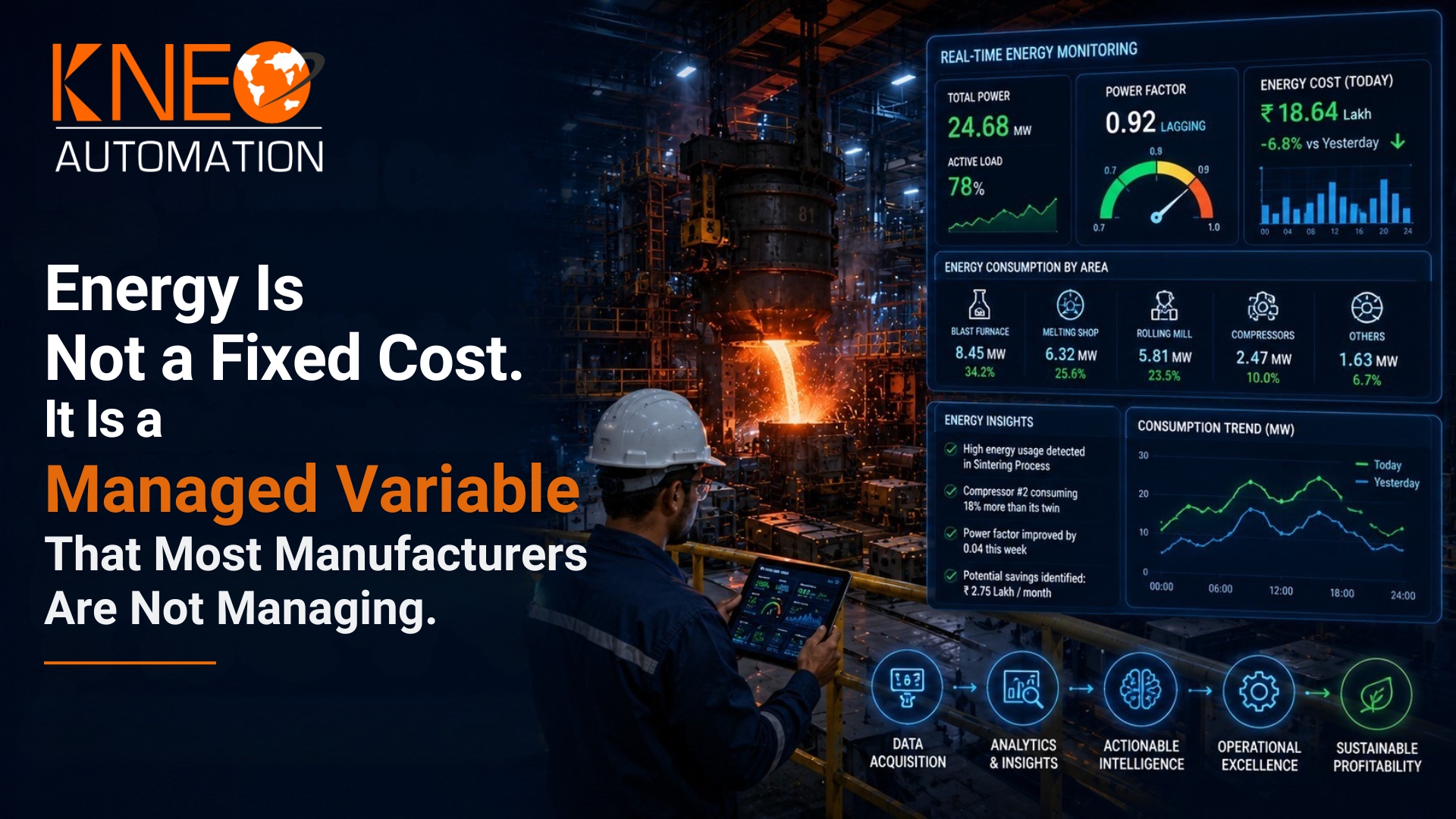
Every steel plant CFO knows the energy bill. Very few know which furnace, on which shift, in which process step, drove this month's number higher than last month's. That gap is not a reporting problem. It is a profit problem.
The Blind Spot in Heavy Industry Energy Management
Utility-level metering tells you how much energy your facility consumed. It does not tell you where, when, or why. In an integrated steel facility running blast furnaces, melting shops, sintering operations, and rolling mills, the aggregate number on the monthly bill is almost meaningless as an operational signal. The information you need to make decisions - which machine, which process step, which shift - exists nowhere in that number. It exists at the machine level, if you choose to measure it there.
What Machine-Level Energy Monitoring Reveals
When the monitoring platform went live across this facility, the team expected to find the big consumers. They knew the furnaces were large. What they found instead were patterns. A compressor in the compressed air network was drawing 18% more current than an identical unit running on the same header - a symptom of a developing bearing fault that had not yet triggered any mechanical alarm. A capacitor bank was operating at a power factor that was generating avoidable reactive power charges on the utility bill. A specific point in the sintering cycle showed a consistent energy spike that correlated, when the data was analysed, with a damper that was sticking - adding load to the ID fan motor on every cycle.
From Fixed Overhead to Managed Asset
The shift this monitoring enables is conceptual before it is financial. When energy data resolves to the machine level, in real time, energy becomes something you manage rather than something you pay. You can set baselines for each asset and track drift. You can correlate energy anomalies with process deviations. You can price product lines based on actual energy consumption rather than blended averages. For the commercial team at this facility, the ability to know the energy cost of a specific rolling sequence per tonne changed how they priced certain customer contracts.
Sustainability Is Not Separate From Profitability
Industrial decarbonisation commitments are, for most manufacturers, uncomfortable until they become financially legible. The plant manager who reduces energy waste by 12% through machine-level monitoring has improved the margin, reduced the carbon intensity of the product, and generated the data required to report both. These are not three separate achievements. They are one operational decision, measured correctly. The organisations making genuine progress on sustainability targets are the ones who have connected those targets to the same operational data that drives their cost reduction programmes.
If your energy cost is a fixed line in your P&L, you are paying for a problem you cannot see. www.kneo.in