The ETP Plant That No One Was Watching - Until It Started Watching Itself
Regulatory compliance in industrial wastewater treatment is not a quarterly event. It is a continuous obligation. The moment your pH drifts outside the permitted range, you are non-compliant - whether or not anyone noticed, and whether or not the monthly report looks clean.
The Real Cost of Manual ETP Management
Consider the cost structure of a manually-operated ETP. Labour, at around 27% of operating cost, is the largest single line item - largely driven by the requirement for physical presence to check parameters that instrumentation could read continuously. Electricity, at 18%, is the second. Together they represent nearly half of what it costs to run the plant, and both are reducible through automation and remote monitoring. Regulatory risk, however, does not appear in the cost breakdown. It appears in the enforcement notice. Manual rounds cannot provide a continuous compliance record. They cannot detect a parameter trend before it becomes a violation. They cannot answer, when asked by an inspector, what the pH reading was at 3am on a specific Tuesday.
What an IoT-Connected ETP Actually Monitors
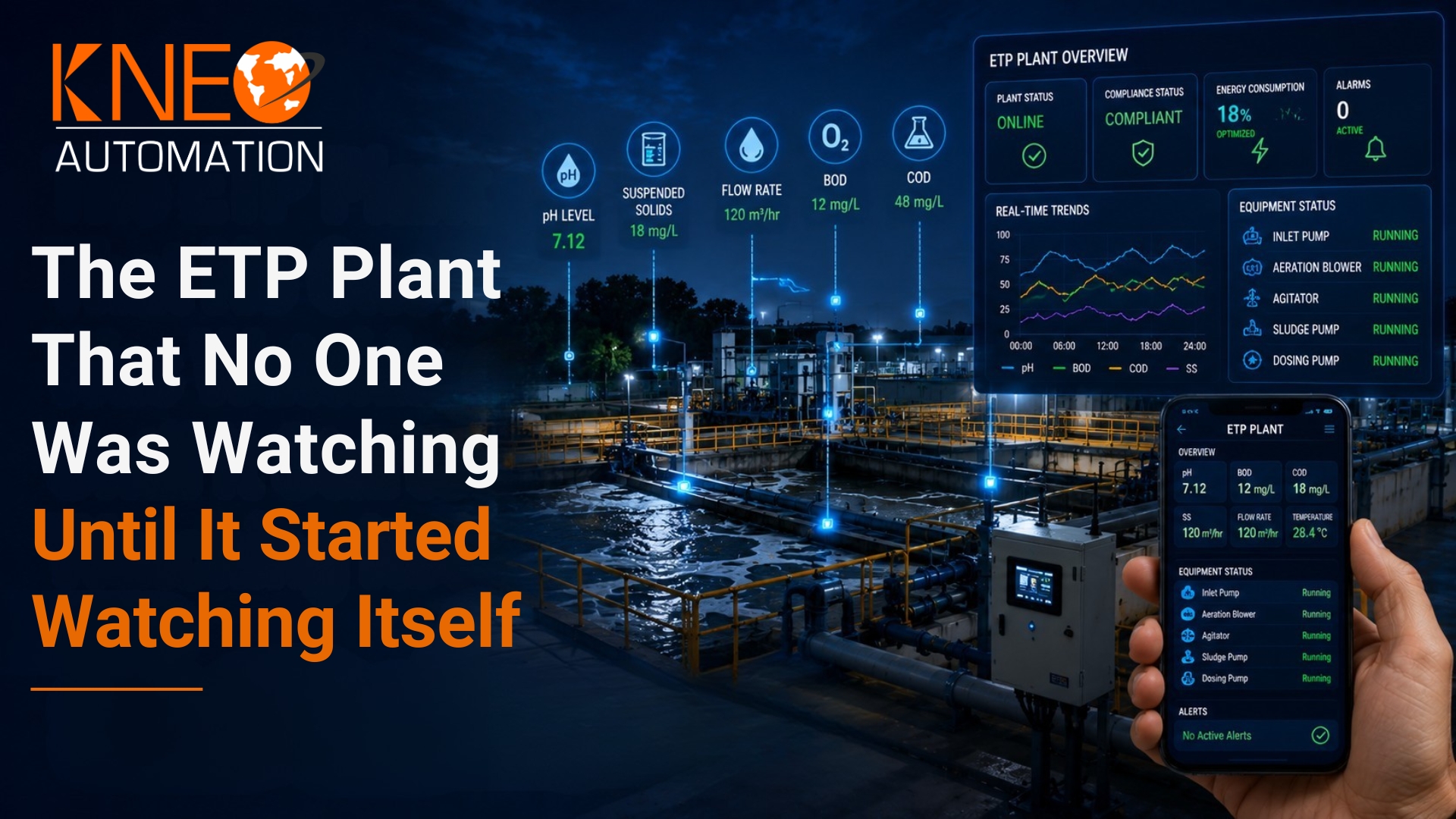
The parameters that define ETP compliance are not exotic. pH, total suspended solids, BOD, COD, oil and grease, flow rate - all are measurable with standard field instruments. The instrumentation was, in most cases, already installed. What was missing was the connection: from instrument to gateway, from gateway to cloud, from cloud to a dashboard that presented the readings in a form that allowed someone to act on them in time to matter. When that connection was made, morning rounds became exception management rather than routine patrol. Parameters that were drifting toward limits triggered alerts before they crossed them.
The Offline Data Protection Feature That Nobody Talks About
Remote industrial sites have connectivity gaps. This is not a future problem to be solved; it is a present reality to be designed for. A monitoring system that loses data during a network outage cannot produce a credible continuous compliance record. The architecture in this deployment addressed this directly: the edge gateway stored raw readings locally during outages and synchronised automatically when connectivity restored. The compliance record was uninterrupted. The audit trail was complete. This is not a sophisticated feature. It is basic engineering discipline applied to the regulatory environment the system operates in.
The Operational Model That Changes When Visibility Arrives
The 60% reduction in physical inspection costs and 30% reduction in maintenance costs were outcomes, not targets. They were what happened when the operational model changed from presence-based to data-based management. Engineers stopped driving to sites to read gauges. They started reviewing dashboards for anomalies. Maintenance stopped being reactive to equipment failures and started being responsive to early-warning parameter shifts. The ETP did not become more compliant because the team tried harder. It became more compliant because the information required to stay compliant became continuously available.
An ETP that cannot tell you what it is doing right now is a compliance risk waiting to become a cost. www.kneo.in